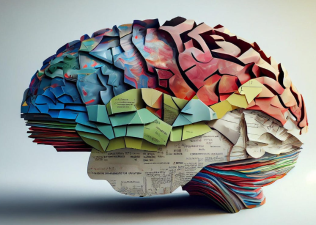
We live in an era of overwhelming, even excessive, content. Movies, music, and books are readily available with a simple tap of a screen. Yet, a pervasive hunger is spreading. People are no longer content with merely viewing content from afar; they crave personal presence. This pursuit of presence may be a profound psychological compensation for our times.
Information overload is not a new problem. Even in the era of widespread newspapers, scholars worried about "news overload"; the widespread adoption of cable television also sparked similar criticisms and anxieties. Today, the information explosion is even more severe. Mobile internet makes information dissemination anytime, anywhere, while recommendation algorithms make personalized content delivery possible. Furthermore, the barriers to content production have been significantly lowered in the internet environment, making everyone a content producer, and the ability of AI to generate content is becoming practical.
The Information Explosion Era
Resource Overload and Energy Scarcity
In this era of information overload, we face countless choices daily—books, movie lists, and exhibition information—far exceeding our individual processing capacity. Information overload leads to choice anxiety, transforming the problem of "difficulty in choosing" into "choice anxiety." Over time, cultural consumption has gradually become a way for people to alleviate this anxiety, even evolving into mere "digital hoarding."
Fragmented Time vs. Deep Experience
In today's fast-paced life, we often use fragmented time to experience culture, such as listening to paid knowledge content during our commute, watching movie reviews during lunch breaks, or quickly skimming classic literature before bed. While this enriches our lives to some extent, it makes it difficult to achieve the spiritual satisfaction of immersive thinking. The fragmented nature of modern life makes immersive cultural experiences difficult, hindering deep thinking. Neuroscientists have pointed out that frequently switching between different informational scenarios consumes a large amount of our cognitive resources, which is why we feel empty after prolonged phone use.
The Erosion of Utilitarian Thinking
Driven by the pursuit of efficiency and self-improvement, we often view cultural experiences as an investment rather than pure enjoyment. Treating cultural experiences as an investment rather than enjoyment diminishes the nourishing function of culture, whose essence lies in the joy of the soul and the depth of thought, rather than merely pursuing external utilitarian returns. Just as those who focus excessively on calories and neglect the true flavor of food may ultimately lose the ability to savor the real joy of life.
Three Shackles of the Spiritual Dilemma
The Impact of Fragmented Time
First, fragmented time has profoundly transformed cultural consumption patterns. In the fast-paced modern life, people's leisure time is fragmented. Delivery riders scroll through social media while waiting, and office workers listen to paid courses on their commutes. These "cultural snacks," while satisfying short-term spiritual needs, fail to provide deep nourishment.
The Degradation of Culture by Entertainment to the Death
Second, the trap of entertainment to the death gradually erodes the depth of culture. Algorithm-push "entertainment for the taking" content replaces the long-term value of books with instant dopamine stimulation. Instant entertainment weakens cultural depth and affects people's perception of deeper cultural values.
Problems Caused by Cognitive Overload
Finally, cognitive overload leads to a phenomenon of mental energy conservation. In the age of information explosion, people receive far more information every day than a person in the 15th century saw in their entire life. Faced with a massive amount of information, the brain will instinctively choose a low-energy mode to cope, which precisely provides a market space for quick content such as "reading a book in five minutes".