Cultural heritage is the crystallization of human wisdom, a witness to history, and a link between us and the past. However, in the rapid development of modern society, cultural heritage faces numerous challenges such as natural erosion, human destruction, and the interruption of its transmission. Today, protecting cultural heritage is no longer simply about covering ancient sites with protective films or putting documents in sealed warehouses. It relates to a nation's memory, identity, and future development space. The advent of modern technology has provided us with more scientific recording methods, more efficient protection methods, and more vivid ways of transmission. Combining tradition with technology can not only prevent precious cultural resources from disappearing completely but also allow more people to understand, participate in, and benefit from them in a more relatable way.
The Protection of Cultural Heritage
Cultural heritage is a nation's precious asset, possessing significant historical, cultural, and artistic value. However, due to population growth and urbanization, cultural heritage faces increasingly severe threats. Many cultural heritage sites are gradually disappearing due to long-term natural weathering, human destruction, theft, and illegal commercial use. Therefore, the protection of cultural heritage is a crucial task. The protection of cultural heritage has always been a hot topic. Currently, several new technologies are being introduced into cultural heritage protection strategies to better safeguard cultural heritage. Among these technologies, digital technology, surveillance, and drones are the most common.
Application of Digital Technology
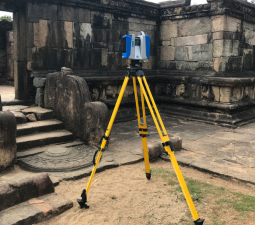
The application of digital technology is a crucial direction for cultural heritage protection. Currently, digital technology is widely used in artifact restoration, artifact preservation, and cultural heritage display. For example, digital scanning technology can be used for non-contact digital reconstruction of artifacts and cultural heritage, enabling artifacts to be fully shared and protected. Digital technology can also be used in museum displays, allowing more people to understand and pay attention to the protection of cultural heritage.
Application of Surveillance Technology
Surveillance technology also plays a vital role in cultural heritage protection. Since the protection of cultural heritage requires 24-hour uninterrupted monitoring, human surveillance is clearly insufficient. Therefore, surveillance technology has become an essential means of cultural heritage protection. The application of surveillance technology includes equipment installation, the design of the monitoring range, and the operation of the monitoring system. Through sophisticated surveillance technology, damage to cultural heritage can be detected and addressed quickly to achieve better protection.
The Challenges and Tasks of Conservation Require a Clear Direction
- Tangible heritage itself faces risks such as aging, environmental pollution, vibration, and looting. Relying solely on visual inspection and traditional methods often fails to fully uncover these hidden dangers.
- Much cultural information is scattered across different mediums such as manuscripts, inscriptions, murals, and oral histories. Systematic support is needed for its organization, archiving, retrieval, and cross-regional circulation.
- The transmission of intangible heritage, such as folk crafts, languages, and rituals, is increasingly impacted by factors such as population mobility and young people's exposure to new media.
- Insufficient funding, personnel, and technical standards also restrict the sustainability and transparency of conservation efforts. These challenges are not isolated but rather overlapping, requiring comprehensive governance and long-term investment.

The Role of Modern Technology in Conservation and Transmission
Digitization and Archival Construction
Through high-resolution photography, laser/3D scanning, point cloud construction, and other methods, the form, decoration, material structure, and traces of writing on physical objects can be completely recorded, forming sustainable and searchable digital assets. Digitization does not replace physical objects but rather expands the avenues for research, observation, and restoration.
Intelligent Environmental Monitoring and Maintenance
Utilizing sensor networks, drone inspections, remote sensing data, and microclimate analysis, real-time monitoring of environmental indicators such as temperature, humidity, light intensity, and pollutant concentrations around cultural relics can be achieved. This allows for early detection of potential risks, the development of phased maintenance plans, and a reduction in the cost and error of manual inspections.
The Role of Virtual and Augmented Reality in Dissemination
Transforming digital achievements into virtual museums, interactive exhibitions, and immersive learning environments reduces the stress on fragile cultural relics from on-site displays and allows the public to understand history and craftsmanship in a more intuitive way.
Data Governance and Traceability
Establishing metadata standards, digital copyright, version control, and access permissions.