
With the rapid development of the economy, technology, and transportation, globalization has become an irreversible trend. It has not only promoted economic integration among countries worldwide but also profoundly impacted local cultures. The exchange and integration brought about by globalization have made the world smaller, and the flow of people and information has accelerated, presenting both opportunities and challenges for traditional cultures. Globalization has enabled the flow of goods, information, and people across the world faster than ever before. This rapid interaction is not a one-way shock, but an interactive process: economic forces drive technologies, products, and ideas across geographical boundaries, while also introducing new choices and possibilities into the daily lives of local communities. Local cultures are not merely passive recipients of globalization; they demonstrate resilience and creativity in the process of absorption, transformation, and reshaping. As long as we focus on "interaction, transformation, and reproduction," we can see that globalization brings both challenges and opportunities.

The Impact of Globalization on Local Culture
- First, globalization has exacerbated the trend of cultural homogenization. With the acceleration of globalization, Western culture has gradually become the mainstream, while other cultures have been impacted in areas such as media, music, and film. The younger generation is more easily exposed to Western cultural products, gradually losing interest in and identification with local cultures. This trend of homogenization may lead to the fading and disappearance of local cultures.
- Second, globalization has caused local traditional crafts and handicrafts to lose their market. With the increased demand for goods due to globalization, large-scale industrial production has gradually replaced traditional handicrafts. Many local traditional skills face the danger of being lost because the younger generation lacks interest in these skills and there is insufficient market support.
Globalization brings global goods, ideas, and information to local areas through the economy, media, and technology.
Language is the carrier of culture and one of the most direct battlegrounds of globalization
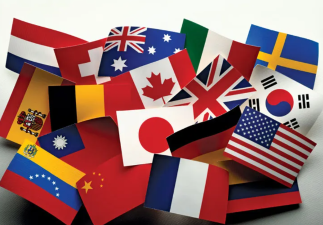
Globalization brings about diverse dialogues.